
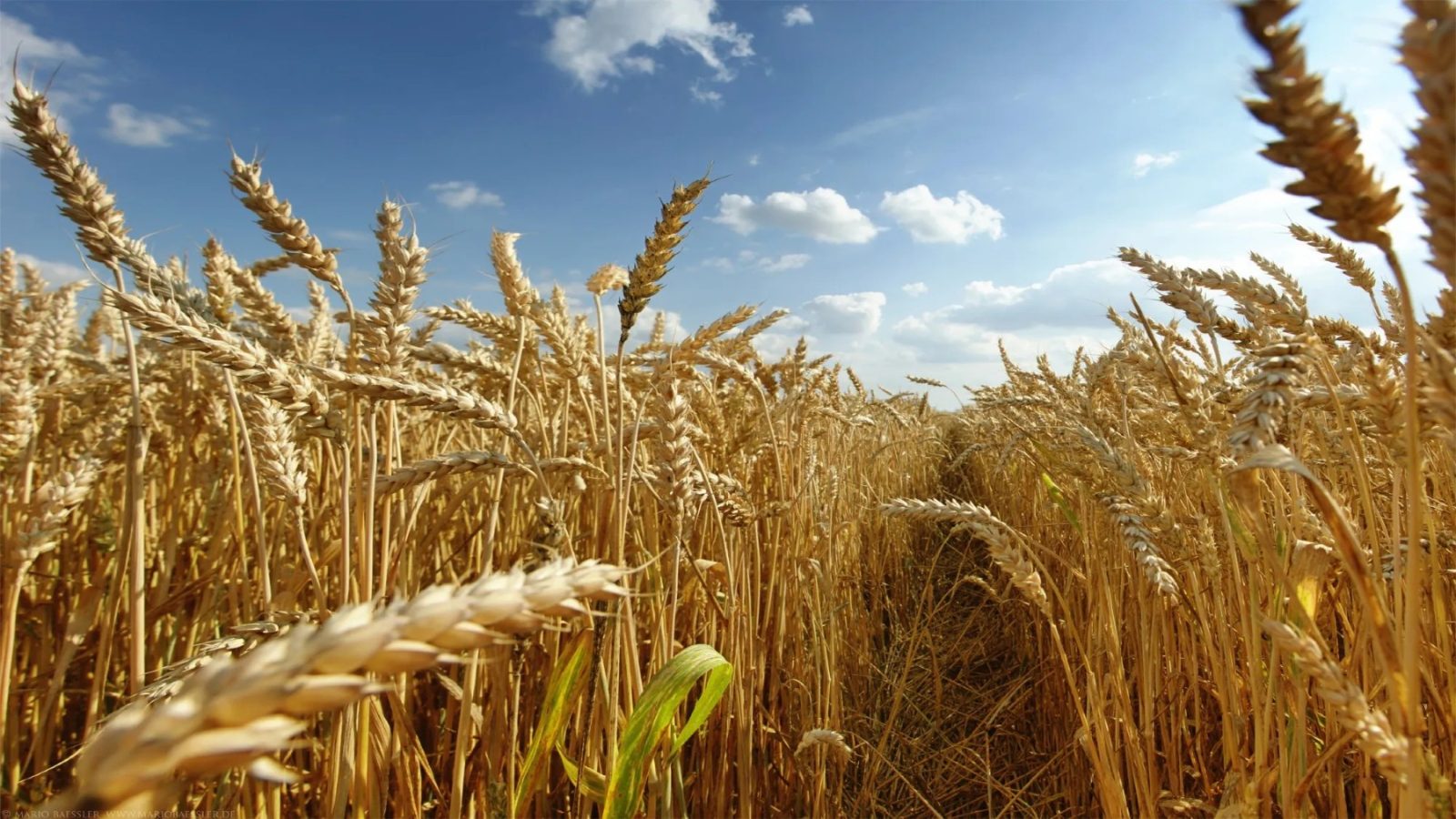

Even with only 13–15% of its land used for cultivation—and just 7–8% cultivable land—Russia has emerged as the leading global wheat exporter in recent years. This success is not likely on the surface, especially in light of the nation’s wild weather, vast tracts of tundra, and relatively small agricultural proportion of land. But a closer examination of Russia’s rich southern provinces, its strategic investment in infrastructures, and a changing world dynamic uncovers how the country utilized its vulnerabilities to dominate the world wheat market.
Southern Breadbasket: Rich Black Soil Powers Enormous Production
The cause of Russia’s wheat prosperity is found in its south, specifically Krasnodar Krai, Rostov Oblast, and Stavropol Krai. These regions border the Black Sea and North Caucasus and have chernozem—a rich black soil—and a temperate climate suitable for grain crops. The climate of these regions is level, well-watered, and has long growing seasons.
The Krasnodar Krai alone yields more than 10 million metric tons of wheat each year, frequently equalling entire nations in production. Neighboring Rostov and Stavropol have equal amounts, and the three provinces compose the core of Russia’s wheat machine. Although these provinces constitute a very small portion of Russia’s overall geographic territory, their extremely localized grain production renders them disproportionately important to Russian domestic food supply and foreign trade.
Infrastructure and Geography: Strategic Export Power
Production is important, but export capacity is what distinguishes Russia. In the last twenty years, Russia has invested hugely in grain terminals, rail networks, and port capacity—particularly around the Black Sea. Novorossiysk and Taman ports have emerged as principal grain-exporting centers, enabling Russia to export wheat cost-effectively to the Middle East, North Africa, and parts of Asia.
Russia’s geographic position has one more advantage: it is nearer to most of the world’s leading wheat-importing countries than their North American or Australian rivals. Russian wheat is most appealing to Egyptian, Turkish, and sub-Saharan African importers with lower shipping time and expense.
Current investment has also been focused on decreasing dependence upon the Black Sea route through expansion in Baltic Sea ports such as Lugaport and Vysotsky. The expansions have been focused on opening up trade with new markets such as Latin America and South Asia, as well as lessening geopolitical threats.
Market Influence and Global Food Security
The surge in Russian wheat exports has made it a leading figure when it comes to food security on a worldwide scale. Russia provided close to one-fifth of the world’s total wheat exports as of 2020. Egypt, the world’s biggest consumer of wheat, is presently dependent on Russia for over 60% of its wheat requirement every year.
This reliance was highlighted in times of international uncertainty, like the COVID-19 crisis and the Russian-Ukrainian war, when interruption of Russian grain shipments shook world markets. While displaying weakness, they also reassured Russia’s pivotal position in world foods. Its power to dictate wheat prices allows Russia immense geopolitical power, especially over food-deficit areas.
Climate Challenges and Agricultural Adaptation
Russia’s food supremacy comes with dangers. Global warming is increasingly disturbing farmers in the south where wheat is cultivated most densely. Wheat crops were decimated by droughts, late frosts, and unpredictable rainfall in recent years. Wheat crops declined by up to 30–40% in some provinces because of adverse climate.
To cope, Russian farmers are buying drought-resistant crops, increasing irrigation schemes, and testing precision farming technology. Meanwhile, temperatures are gradually making northern areas more welcoming places to grow crops, such as much of Siberia. These changes could eventually put the country’s agricultural account in the black and provide it with a cushion against southern uncertainty.
Briefly put, Russia’s recent ascension to wheat dominance is a story of good geography, prudent investment, and adaptive strategy. With only a minority of its territory adequate for cultivation, the exceptional fertility of its fields in the south, coupled with sagacious export logistics and pushing out agricultural frontiers, insures that Russia will be an elephant in world wheat markets for the next several decades.