
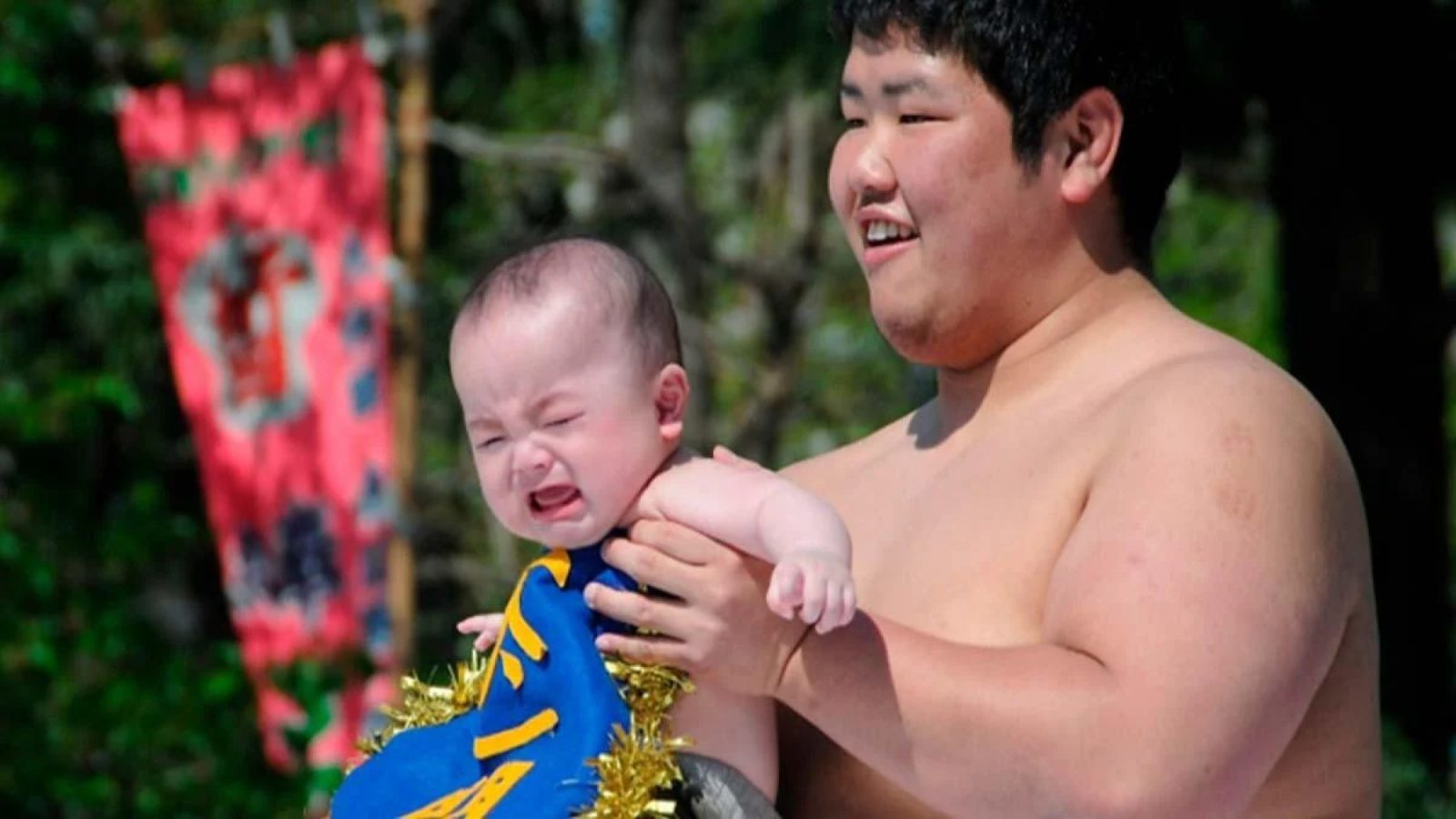

For over 400 years, there has been a lovely and sentimental tradition in Japan where tears are encouraged instead of suppressed. There is the Naki Sumo Festival or also called the Crying Baby Sumo contest at the Shinto temples across the country where sumo wrestlers compete in trying to make babies cry first. In Japanese culture, the wailing of an infant is believed to ward off evil spirits and bring health and vigor in the future. While it might appear strange to an outsider, the tradition unites spirituality, culture, and community into an grand celebration.
Where Sumo and Spirituality Meet: How the Festival Works
The Naki Sumo Festival is celebrated usually in the spring, most traditionally at Sensoji Temple in Tokyo. Six-to-eighteen-month-old babies are brought in by their parents and shown to sumo wrestlers, who bounce them up slowly in a raised ring. The challenge is to get the baby to cry before the other’s does—whichever baby cries loudest or first wins. In the event that neither does, an umpiring presence in a traditional demon mask may provide some friendly tricks to get one wailing.
The sumo wrestlers do not yell and scare the babies ominously; they jump, or cross their eyes at them, or recite ancient incantations such as “naki naki.” The matches are not competitive bouts; they are festivities and are followed by robust belly laughs of the onlookers. Parents clap on the sidelines, grinning when their baby begins to cry. To them, the crying is not mere sound—they are a blessing in disguise in a ritual custom.
Why a Baby’s Cry Is Such a Powerful Symbol in Japan
In Japan, a crying baby is not seen as disturbed or delicate but as active and spiritually protected. There is even an adage—”naku ko wa sodatsu”—or “babies who cry grow up.” That mind is that crying gives birth to children to become stronger and mature earlier, both physically and emotionally. The more they scream, the more blessed, which is why there are so many parents who hold this tradition dear.
The ceremony also serves a profound function: to ward off evil spirits and ill fortune from babies. Most Japanese families consider it a spiritual ritual that will bring goodness and health into the life of their child. Though it can be noisy and chaotic, the mood is open and polite, something of a reflection on Japan’s skill at being able to approach serious traditions with levity. These are not the tears of terror, but the murmurs of strength to be.
The parents view the festival as a passage of right
It sounds strange that parents would pay to get their babies to cry, but to them, it’s not agony, it’s a gift. Some parents and mothers plan ahead for days, dressing their kids up in bright kimonos or ceremonial bibs. For them, the festival is not agony—it’s a milestone, a baptism or a first birthday. It’s a time when the whole community celebrates a child’s life and potential.
The parents also join in as the festival binds them to a tradition that spans centuries. There is relief in the fact that their ancestors stood in the same shrines, heard the same wails, and prayed for the same boons. The laughter on the day is not at the expense of the children but in welcome of their birth and safety. It is a communal cultural legacy, one celebratory wail at a time.
Ancient Beliefs Hold Firm in a Fast-Changing World
In today’s parent-obsessed Western world, where coping is all about calming and comforting babies, Japan’s Crying Sumo Festival is a refreshingly alternative take. It reminds us that crying can be profound—piercing even—and part of an ancient knowledge that prioritizes spiritual courage over calming. In a country with cutting-edge technology and bustling cities, events like Naki Sumo still attract huge crowds year after year.
There is something deeply touching in the photograph of wrestlers holding small babies gently in a sumo ring, laughing families surrounding them. It is a great mix: vulnerability with strength, tradition infused with mirth. The Crying Baby Sumo tournament demonstrates how a single tradition may have layers of significance far more profound than its surface. In Japan, a baby’s cry is not an issue to resolve, but a gift to be celebrated.