
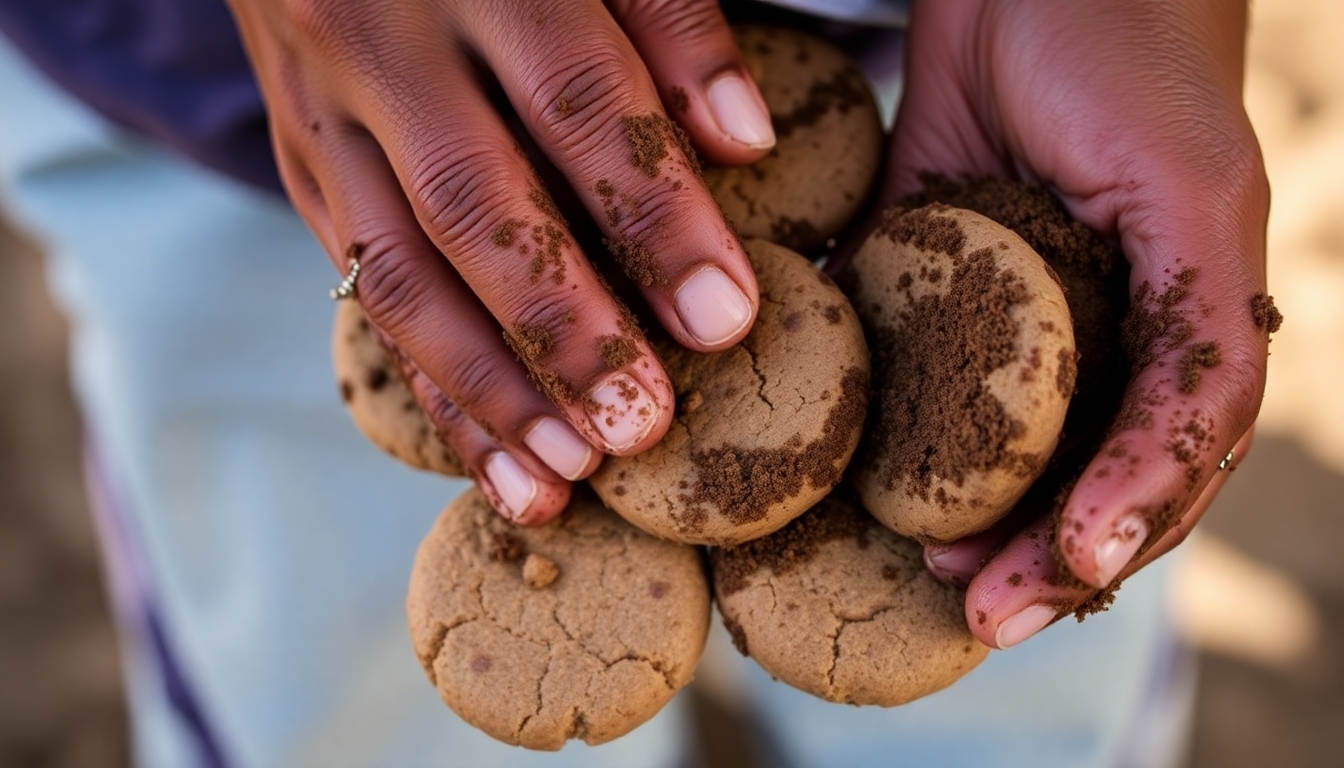

In Haiti’s poorest neighborhoods, particularly around Port-au-Prince’s notorious Cité Soleil slum, families facing extreme hunger turn to an unsettling survival mechanism: bonbon tè, or “earth cookies.” These clay-based substitutes represent one of the most stark symbols of food insecurity in the Western Hemisphere, highlighting the desperate measures people take when conventional nutrition becomes unaffordable. The practice illuminates the intersection of poverty, resilience, and human dignity in one of the world’s most economically challenged nations.
Clay cookies emerge from traditional geophagy practices
The creation of bonbon tè involves clay dug from Haiti’s Central Plateau, mixed with salt and vegetable shortening, sometimes enhanced with sugar, then sun-dried until hardened. This practice dates back generations, rooted partly in geophagy—the traditional belief that certain clays ease hunger pangs or provide essential minerals like calcium. Pregnant women and children historically consumed these clay mixtures as antacids and calcium supplements, though medical evidence supporting these benefits remains limited.
However, what began as traditional medicine has evolved into a desperate survival strategy. The cookies contain no real nutritional value and can carry harmful contaminants, including lead, bacteria, and parasites. Despite these health risks, families continue consuming them because they represent the cheapest available option to fill empty stomachs when food prices soar beyond reach.
Food insecurity reaches crisis levels across Haiti
United Nations reports indicate over 4 million Haitians regularly face food insecurity, representing one of the highest rates in the Western Hemisphere. The global food and fuel crisis has hit Haiti particularly hard, with the UN’s Food and Agriculture Organisation predicting food import bills will increase by 80 percent annually—the fastest rate worldwide.
Economic factors drive desperate nutritional choices
Rising food costs have made basic staples unaffordable for Haiti’s poorest citizens, where approximately 80 percent live on less than 2daily. Two cups of rice now cost 60 cents in La Salineslum markets, representing a 50 percent increase from previous years. Beans, condensed milk, and fruit have experienced similar price escalations, while even clay costs have risen by 1.50 over recent periods.
The mud cookies sell for approximately 5 cents each, making them bargain alternatives compared to conventional food staples. Women in Fort Dimanche shantytown process the clay into cookies by carrying buckets of dirt and water to rooftops, straining out rocks and clumps, then mixing in shortening and salt before sun-drying the mixture. This informal economy provides income for producers while offering affordable sustenance for desperate families, similar to how urban farming initiatives address food security challenges in other developing regions.
Health implications raise serious medical concerns
Medical professionals strongly discourage relying on clay cookies for sustenance, warning of malnutrition risks and potential toxin exposure. Dr. Gabriel Thimothee, executive director of Haiti’s health ministry, actively discourages consumption, stating the practice poses significant health dangers. The cookies provide no nutritional benefits while potentially introducing harmful parasites and toxins into the digestive system.
Broader implications reflect systemic poverty and resilience
The image of mothers and children making or consuming bonbons tè transcends folklore, representing lived reality born from poverty and human resilience. This practice demonstrates how hunger extends beyond simple food scarcity to encompass issues of access, dignity, and survival in economically marginalized communities. The cookies serve as an unofficial misery index, with production increasing as desperation rises throughout Haiti’s most vulnerable populations.
As international aid organizations work to address Haiti’s food crisis, the persistence of clay cookie consumption serves as a powerful reminder that sustainable solutions must address the root causes of poverty rather than merely treating symptoms. Understanding these desperate measures helps illuminate the urgent need for comprehensive approaches to food security, much like how community resilience programs address multiple interconnected challenges facing vulnerable populations worldwide.