
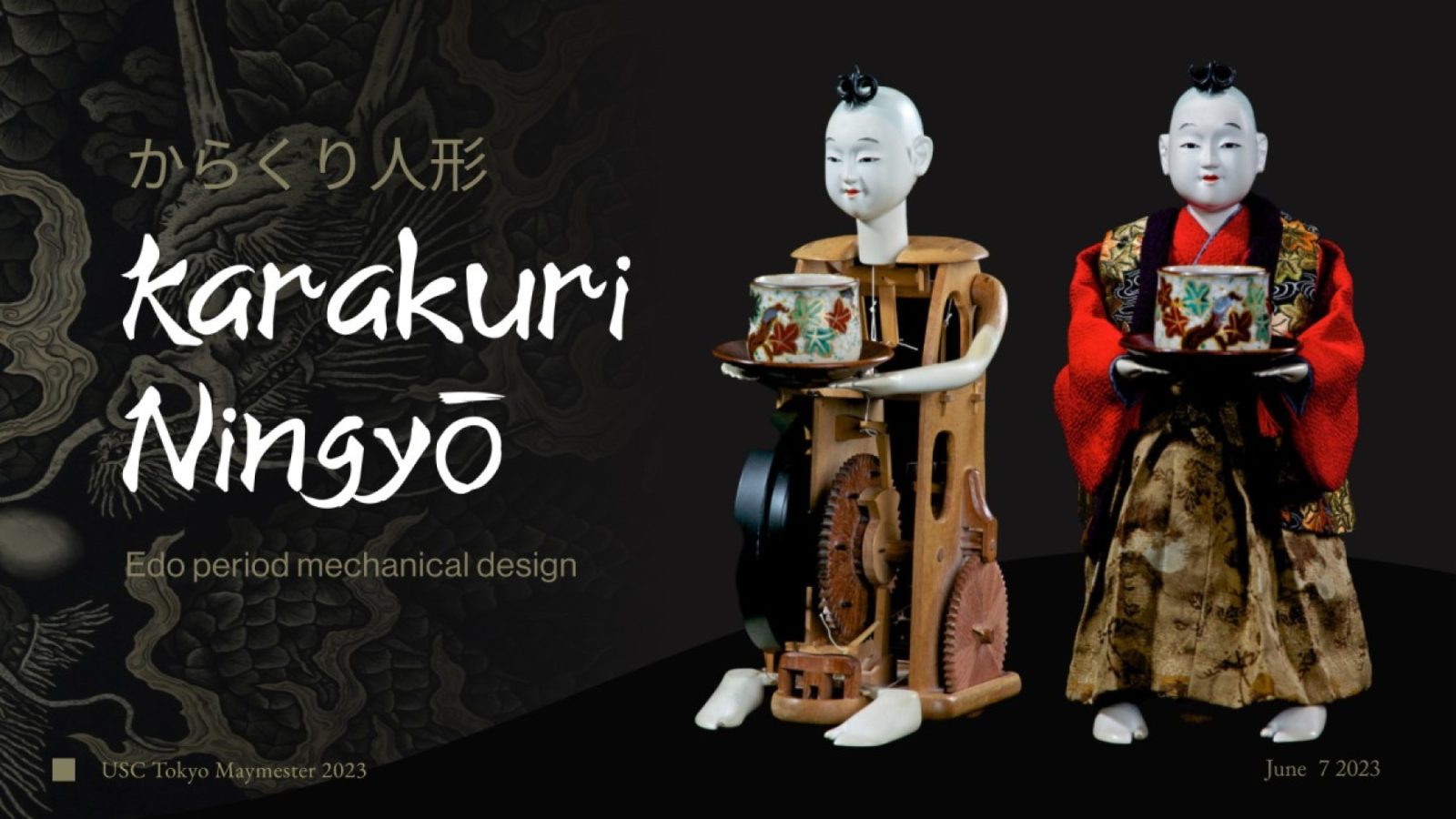

Well before humanoid robots stunned the planet, Japanese craftsmen in the 1600s constructed advanced automata that amazed crowds with their dainty movement and hidden mechanisms. These were known as karakuri ningyō, or “mechanical dolls,” and not only entertained but also demonstrated the wit and master work of the Edo era. The word karakuri actually means “mechanism” or “trick,” and it suggests the ingenious engineering that created the illusion of the dolls’ movements being magical.
The Origin of Karakuri Dolls Through European Influence
Origins of karakuri dolls lie at the beginning of the 17th century, during the Edo period of Japan, years of comparative peace and cultural prosperity. Even while Japan was effectively closed to outside influence according to the sakoku policy of the Tokugawa shogunate, European clock technology somehow or other made its way into Japanese hands. Spring-driven clocks and gear systems were imported by Jesuit missionaries and Dutch traders, and these were soon the foundation for the construction of Japanese mechanical dolls.
Artisans eventually wedded these foreign technologies with their own, substituting simple ornamentation for operational, interactive automata. Skilled manipulation of gears, cams, and springs produced dolls that could walk, pour tea, shoot arrows, or even write kanji.
Originally, such elaborate devices were reserved for the aristocracy—feudal lords and rich merchants. But when this practice became more general, karakuri became a ubiquitous part of Japanese life, decorating festivals, domestic homes, and public entertainments.
The Three Main Types of Karakuri Dolls and Their Purpose
There were three main types of karakuri dolls with distinct purposes and significance by the middle Edo era:
- Butai Karakuri – Theater Dolls
Utilized on stage during stage plays, butai karakuri were large-scale automata for classical puppet theatre. The mechanical actors provided kabuki and Noh performances with thrilling action, particularly if they appeared to do the impossible or produce concealed tricks in the middle of a scene. Surprise and illusion were at the heart of their popularity. - Zashiki Karakuri – Indoor Entertainment Dolls
Smaller than the larger ones, zashiki karakuri were meant for home use. The most celebrated is the tea-serving automaton doll. By adding a cup of tea to its tray, the doll would advance, bow correctly, and retreat with removal of the cup. All this facilitated by a coiled spring and internal system of wooden cams guiding the way—no electricity or motors involved. Ideal icebreakers for high-society parties. - Dashi Karakuri – Festival Float Dolls
Dashi karakuri rode on elaborately decorated floats in street parades and religious festivals. The automata reenacted ancient or mythological events, with elaborate movements, turntable stages, and musical accompaniment. They drew massive crowds and became the centerpieces of festivals such as the Nagoya and Kyoto festivals.
Master Craftsmen and Their Groundbreaking Designs
Two master craftsmen cemented the history of karakuri ningyō:
One of the first butai karakuri was brought to Osaka in 1662 by Takeda Omi, a theatrical automata master. His shows dumped mechanical life on the stage, linking drama and engineering exactness.
A century hence, Tanaka Hisashige, the “Thomas Edison of Japan,” pushed further. Among his masterpieces were the Yumi-Hiki Dōji, a boy who could draw and shoot a bow with a kind of supernatural accuracy, and the Moji-Kaki Ningyō, a doll that could raise a brush to dip in the ink and inscribe intricate kanji letters. Such things involved exquisite craftsmanship and a high level of skill in mechanics and hence Tanaka’s karakuri are timeless models of Japanese ingenuity.
Karakuri’s Lasting Legacy in Japanese Culture
Karakuri dolls weren’t just toys or novelties—they were expressions of an aesthetic ideal. Their true magic lay not in what they did, but in how they did it invisibly. The hidden mechanics were intentionally concealed to maintain the illusion and spark wonder. This philosophy—creating marvel through mystery—continues to influence Japanese design and storytelling, from traditional theater to modern anime and robotics.
That legacy is continued in Japan’s world dominance in robotics. Performing humanoid robots today, whether serving tea or performing on stage, owe a debt to 17th-century mechanical puppets that previously strolled across tatami mats bearing tea and wonder.