
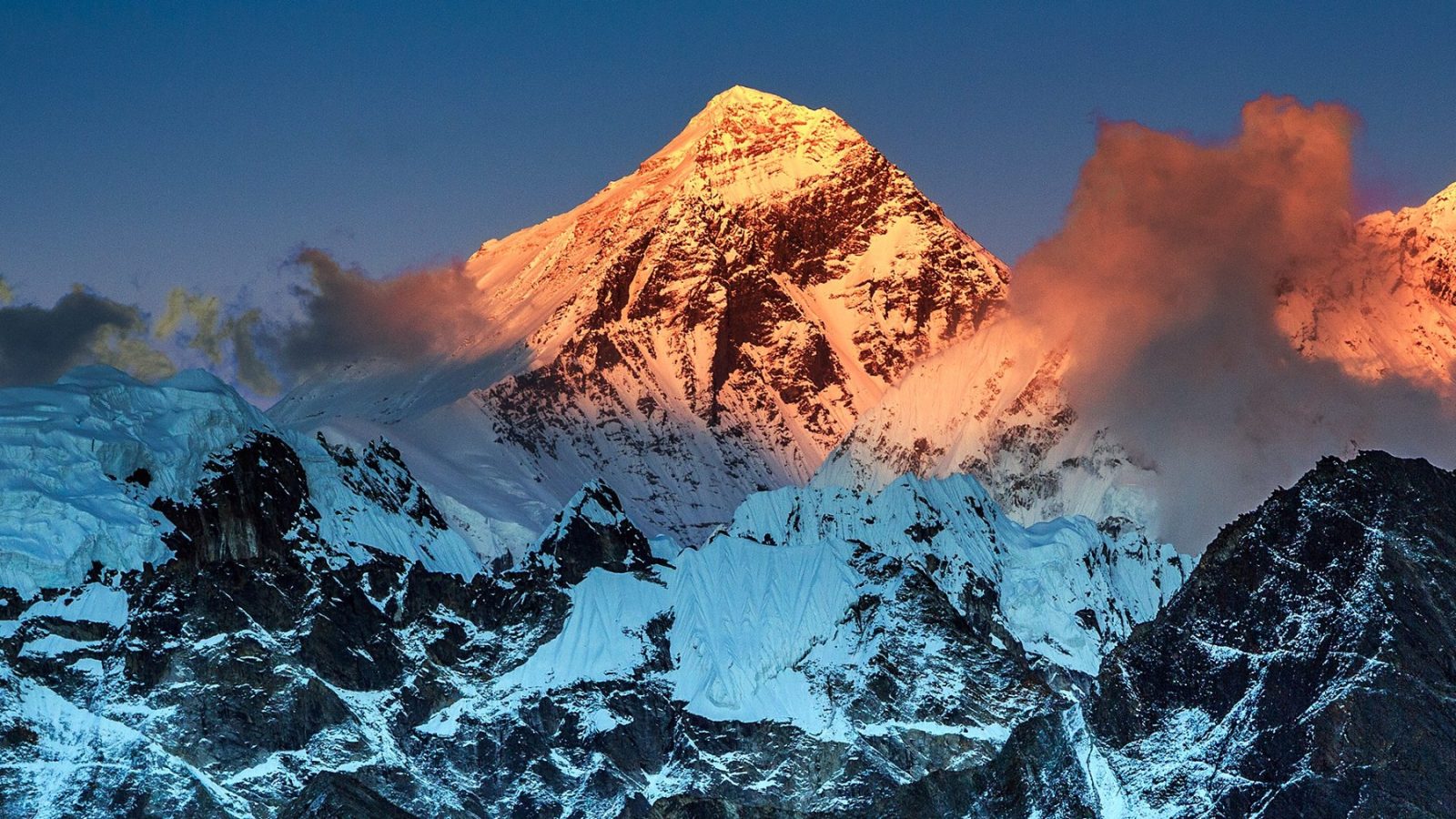

Mount Everest, the planet’s highest peak at 8,848.86 meters, keeps growing every year—a magnificent reminder that our world is not standing still. Everest is to others a testament to the supreme natural monument, gigantic and unmovable. Yet beneath this dignified exterior is the tale of unrelenting movement, hidden forces, and insistent geological rise still under way. Everest is still growing, and its climb upward is a mirror of the huge and long-term power of Earth’s tectonic forces.
How the Collision of Continents Fuels Everest’s Ascent
Its majestic rise is fuelled by one very long, yet forceful process: tectonic plate collision. The Indian plate started colliding with the Eurasian plate about 50 million years ago in an epic geological collision that continues to this very moment. The process folded and thrust the earth between them, buckling and rising up—creating the Himalayas and Everest itself.
Year by year, the Indian plate continues to push northwards at a speed of approximately 5 centimeters, exerting enormous pressure on the Eurasian plate. This ongoing stress causes the Himalayan range to be pushed upwards. Mount Everest itself grows by approximately 4 millimeters each year, a process perhaps hard to witness but significant enough across vast geological time scales. To put this into perspective, that’s roughly how quickly human fingernails grow—a poetic analogy placing Earth’s restlessness into human terms.
Isostatic Rebound: Everest’s Secret Boost
While plate tectonics are the primary kick, another interesting geologic process also adds to Everest’s ascent—isostatic rebound. It happens when Earth’s crust shifts and rises as weight is lost on the surface, like melting ice or deep river incision.
For Everest, one of the key causes was ancient geological convergence of two Himalayan rivers, the Kosi and the Arun, some 89,000 years ago. Their erosive power out of the deep gorges cut through layers of rock and sediment. When they were swept away, the Earth crust at that time felt a “rebound” effect—very slowly pushing upwards to level it out. This secondary uplift, however less spectacular than tectonic collisional uplift, contributes some 0.2 to 0.5 millimeters a year to the Himalayan giant’s towering profile.
These forces combined illustrate how disastrous tectonic motion and slow-motion environmental erosion combine to mold the world’s highest peak.
Nature’s Tug of War: Uplift vs. Erosion
Even with this slow build-up, Everest is not beyond the leveling forces of nature. Weathering, wind, rain, snowmelt, glaciers, and earthquakes wear away its rock walls and slopes over time. Glacial retreat and landslide influence slowly wear away Everest’s mass—to pull the mountain down as other forces push it up.
But so far, the pace of uplift still outweighs erosion, at least according to scientific calculations. The upshot is that Everest is, on balance, still getting taller—though very, very slowly. But this equilibrium will probably shift in the years ahead with global warming fueling glacial melting and intensifying erosive powers. For now, though, the mountain just keeps on growing.
An Ever-Evolving Monument to Earth’s Power
Mount Everest is not only a dream destination for climbers or a sight to attract tourists—she is a living, moving monument to the ever-changing geology of our world. Her slow growth, however minimal, is evidence of the awesome powers working beneath the Earth’s surface. Unmovable stone, it appears, is part of an enormous, concealed system of movement and change.
Millimeter by millimeter, through millions of years, they have pushed Everest up to be the world’s roof. And as long as tectonic plates go on their endless push, Earth’s high point will continue to creep heavenward, defying the implication of permanence and reminding us once more that even the biggest mountains are works in progress.