
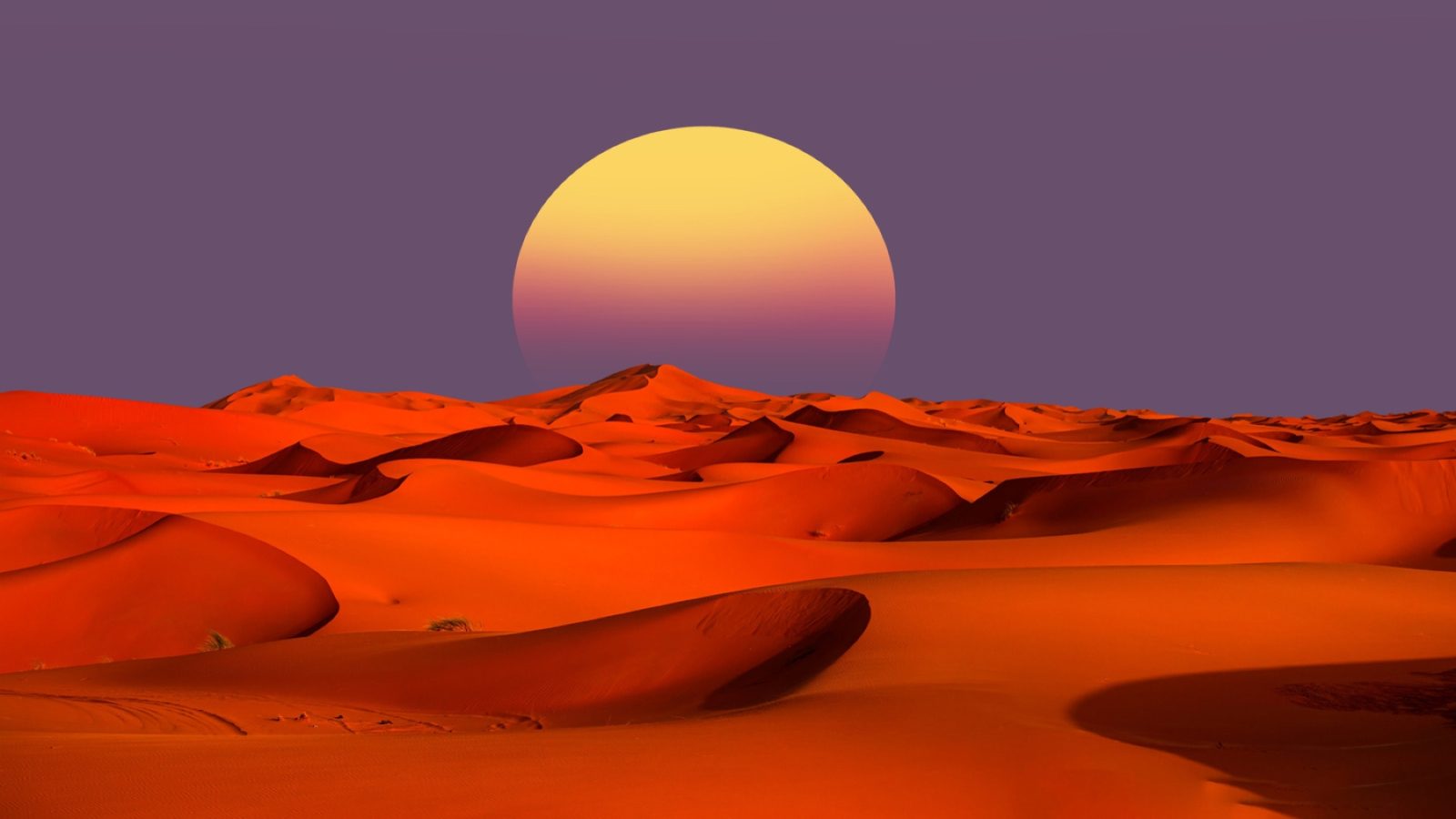

The Sahara Desert—already the globe’s largest hot desert—keeps expanding at an alarming pace. Covering an additional about 48 kilometers every year, nearly as long as Manhattan, its expansion is not merely a geological process but an intensifying ecological disaster. Desert expansion is quickly transforming delicate ecosystems, driving vulnerable communities off their land, and undermining ancient heritage in North and West Africa. Although deserts themselves are generally thought of as unchangeable, the growth of the Sahara reminds us that human use and climate can bring tremendous change.
Human Activity and Climate Change Are Spreading Deserts
Widening of the Sahara results from an aggressive interaction between unsustainable land use and climate change. Natural climate variability, like precipitation regime change and long-term atmospheric change, previously affected desert margins. Today, though, human activities bring about this acceleration significantly—most prominently overgrazing, deforestation, and ill-managed agriculture.
Overgrazing by livestock reduces vegetation cover in a region, making the land loose and susceptible to wind erosion. Forests cut down for cropland or firewood take with them vital root systems that anchor the soil. Without that cushion, the ground becomes dry, cracks, and turns barren. Combine this with increasing global temperatures and extended dry spells, and you’ve got a recipe for wholesale desertification. What used to be cyclical and reversible is now permanent and destructive.
Desertification Is Ruining Livelihoods and Heritage
Sahel communities, the transition zone between the Sahara to the north and the savannas to the south, are feeling the destructive effects of desertification. Malian and Nigerien farmers and herders are losing their land and resources. With fertile land gone, so are crops and grazing land that support millions.
Mauritania’s ancient city of Chinguetti, once a thriving center of Islamic scholarship, is gradually being smothered by sand dunes. Its ancient libraries and centuries-old buildings now remain half-buried in sand. The loss here is as economic as it is existential and cultural. The desert’s encroachment is not merely taking away land but also identity, history, and roots of communities.
Desertification also has the effect of growing instability. When individuals have to move in order to find sustenance, water, and safety, competition for scarce resources could give rise to conflict, displacement, and humanitarian emergencies. Desertification of the Sahara is therefore not a faraway issue to far-flung villages—it has ripple effects on regional and international stability.
Can the Green Belt Save the Sahel?
Against the daunting challenge, hope comes by way of ambitious, high-profile action against desertification. The Great Green Wall, initiated by the African Union in 2007, will plant 100 million hectares of eroded land, construct water retention ponds, and incentivize sustainable agriculture along a strip of country stretching from Senegal to Djibouti.
Also, Algeria’s Green Dam, started in the 1970s, was meant to halt the northward expansion of the Sahara by growing millions of trees on thousands of kilometers. The green belts act as a shield, developing microclimates, reducing erosion, and re-creating local diversity.
However, such initiatives are plagued by serious challenges. Political instability, limited funding, and insufficiency of grassroots participation typically derail attempts. Planting trees is not enough if they die within years due to neglect or because of inadequate water supply. Such initiatives should be accompanied by education, road-making, and ongoing local commitment in efforts to function in the long run.
Time Is Running Out for Prevention and Restoration
The growth of the Sahara is a slow-motion disaster—but it’s growing more quickly than our attempts to stem it. Each kilometer of lost ground is gone to agriculture, biodiversity, and human life. Entire communities will be displaced and regional conflicts will spiral out of control if trends continue. The change is already in motion.
But it doesn’t have to be. Through the adoption of climate-resilient agriculture, through water conservation, and through replanting indigenous vegetation, we can start to stem the tide of desertification. The expansion of the Sahara is an alarm call—a call to urgency, common cause, and international action.
The desert is quiet, but the voice is heard and unambiguous: change must be immediate.