
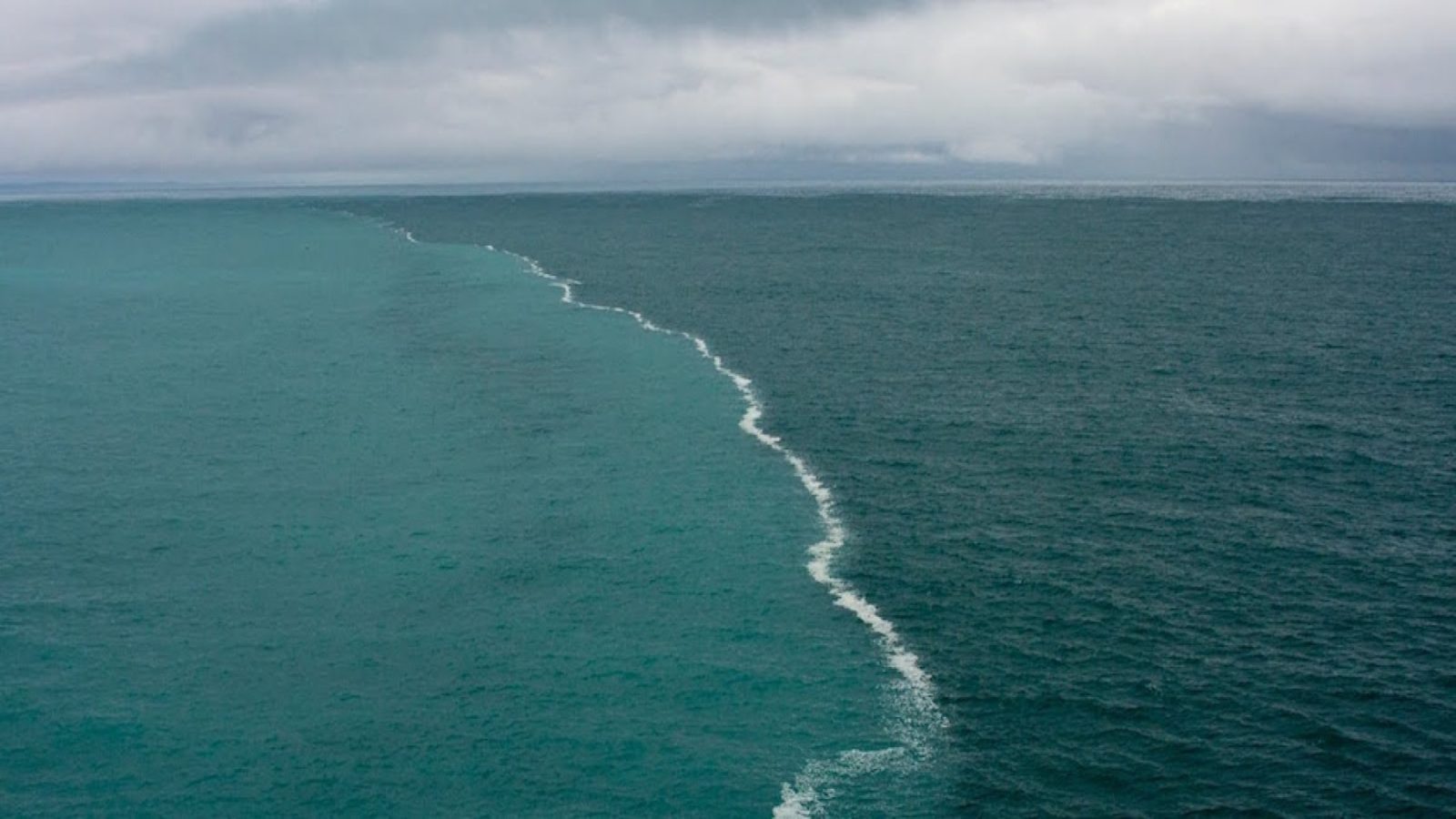

North of Denmark, just outside the town of Skagen, is an intriguing natural phenomenon: the Baltic Sea and the North Sea meet but their waters do not visually combine. The observation of two differently colored bodies of water meeting and forming a line of demarcation is frequently looked at in wonder by tourists. It is not imagined—science accounts for it as resulting from salinity, density, and oceanic dynamics variation.
Salinity and Density: The Physics of the Divide
The simplest reason these two seas are in no mood to merge is due to the difference in salinity. The North Sea, being a part of the Atlantic ocean system, has much saltier water with an average salinity of about 3.5 percent. The Baltic Sea, however, is essentially fresh as compared to it, with a salinity between 0.3 and 0.9 percent in the majority of the region. This is due to the limited contact of the Baltic with the free ocean and its intense freshwater input from rivers and rainfall.
Greater salty water is denser, and North Sea saltwater consequently will naturally float underneath less dense Baltic water. The result is a layering action that discourages the complete mixing of the two. Where these layers interface is characterized by what oceanographers call a “halocline,” an area in which salinity increases with depth. The halocline acts to serve as an effective physical barrier, sustaining the division between the two bodies of water.
Narrow Straits and Ocean Currents Make It Difficult to Mix
Geography is also the cause of minimal mixing of the seas. Geography hinders the exchange of water between the two seas by way of narrow and shallow straits. The bottlenecks limit the quantity and flow of water from one sea to another, preventing the mixing potential.
Along these transitional areas, surface waters will transport the Baltic’s fresher water out into the North Sea. Simultaneously, a sluggish inflow of salty North Sea water seeps into the Baltic along the ocean bed. All of these processes are extremely weather-sensitive, wind-direction-sensitive, and season-sensitive. Under exceptional climatic conditions, such a process as a Major Baltic Inflow is possible, transporting enormous amounts of dense, salty water into the Baltic. These inputs are required for oxygenating the bottom section of the sea, which otherwise stagnates because of the absence of vertical mixing.
Biodiversity Refracts the Border Below
The border between the Baltic and North Seas not only regulates water flow—it has a phenomenal effect on aquatic life. Since most organisms are extremely sensitive to salinity, the brackish Baltic Sea waters accommodate a unique set of organisms in comparison to the more salty North Sea. For instance, certain sea fish and shellfish that do quite well in the North Sea cannot exist in the Baltic Sea because of lower salinity.
In addition to that, the halocline shelters oxygen from penetrating to deeper Baltic layers, frequently creating anoxic or hypoxic conditions. Absence of oxygen would be fatal to bottom-dwelling creatures and cut more biodiversity. The intricate salinity and temperature stratification has rendered the Baltic seas one of the most comprehensively researched seas globally, particularly with regards to ecological sustainability.
A Visible Line in the Water Tells the Story
The most interesting aspect of this phenomenon is that it’s quite literally before our eyes. From the beach at a place like Grenen in Denmark, the two seas converge, but won’t combine. The color contrast is often dramatic, with the darker, denser North Sea water riding up against lighter-colored Baltic waters. This visual contrast is more than just natural beauty—it’s a sign of deeper oceanographic forces at work.
What seems to be an alien meeting of two water bodies proves to be a spectacular display of how small physical differences, i.e., salinity and density, can have far-reaching environmental impacts. It is a warning of the omnipotent forces that control our world’s oceans and the subtle balances that preserve marine ecosystems.