
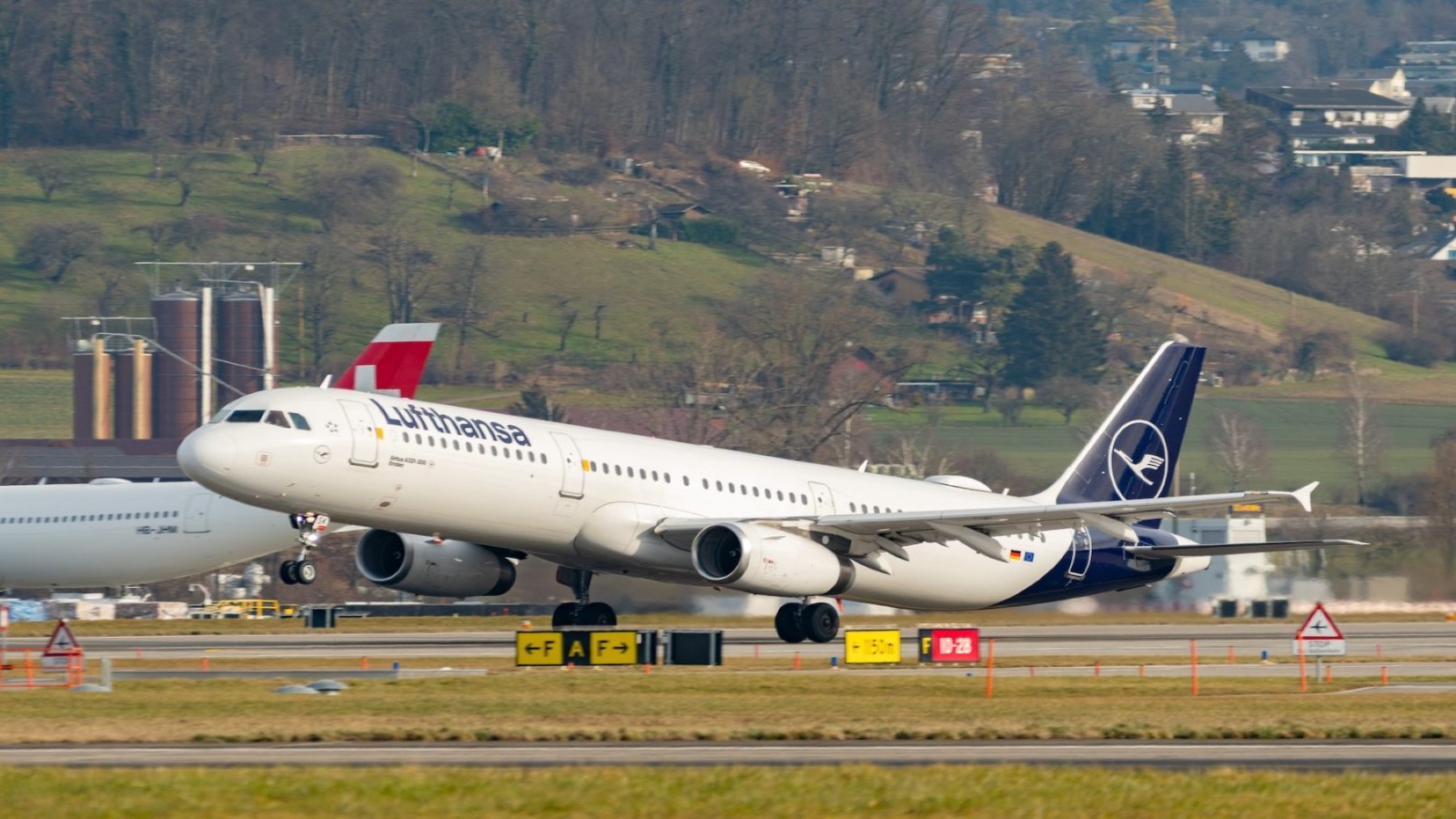

On February 17, 2024, Frankfurt-Bilbao flight Lufthansa LH1352 had a spine-tingling in-flight emergency when the co-pilot became incapacitated with the captain out of the cockpit for a couple of minutes. The Airbus A321 flew in autopilot mode for about ten minutes with absolutely zero conscious pilots on board. The flight reached the landing point safely, but the incident raised alarm bells about cockpit procedures, pilot levels of alertness, and air safety procedures.
Co-Pilot Experiences Medical Emergency Alone as Captain Steps Out During Flight
The intrigue took place on the cruise phase of the flight at around 35,000 feet, when cockpit load is usually light and autopilot is typically engaged. The captain had stepped out of the cockpit for a brief moment—presumably to avail himself of the lavatory—leaving the 38-year-old co-pilot to fly alone. As was standard procedure, this was not unusual in itself. What followed was not standard procedure, though.
Soon after the captain had departed, the co-pilot had allegedly suffered from an acute onset medical condition, either seizure or syncope, and had lost consciousness. The aircraft was completely reliant on its autopilot systems. Autopilot was holding the altitude and heading, but the cockpit was still manned. It was not until the captain tried to re-enter and found the cockpit door would not budge that the gravity of the situation was realized.
Ten Tense Minutes Before Resuming Cockpit Control
Modern commercial jets such as the Airbus A321 have fortified cockpit doors that automatically lock, intended to keep out uninvited visitors. Pilots, in case of an emergency, override the lock from a keypad—but no one inside the cockpit has to make a conscious decision to deny entry. In this accident, the unconscious co-pilot’s body could have jammed or slowed down the override process.
Within a few ten minutes, the co-pilot half-wayed to consciousness—long enough to open the lock and let the captain back in. Once control had been regained, the captain evaluated the situation, made an emergency declaration, and decided to divert the flight. The aircraft landed safely at Madrid-Barajas Airport, where emergency responders were waiting for the flight and took the co-pilot to hospital. He was subsequently diagnosed with a hitherto unknown medical condition that caused the collapse.
Probe Stresses Need for More Stringent Cockpit Protocols
Spanish Civil Aviation Accident and Incident Investigation Commission (CIAIAC) formally investigated and found that autopilot systems functioned as designed but were never intended to replace pilot control. The report stressed the fact that safety procedures should provide for unlikely yet feasible events such as in-flight medical emergencies. It also noted the need to verify procedures that facilitate two people—pilots or trained crew members—being present on board in the cockpit of a flight.
The report called for increased health monitoring of flight staff and reassessment of cockpit access procedures on solo flights. Though Lufthansa stated all procedure needed was adhered to by the flight, the airline also offered to assist officials in examining and, if necessary, altering internal safety practices. EU aviation officials have since started debate over pilot availability and emergency access policy changes.
The Fragile Balance Between Automation and Human Oversight
While the plane was safely landed and no one was hurt, the accident has again generated industry-wide debate concerning the use of automation in flight. Autopilot software is extremely sophisticated, but it is intended to support—not supplant—human judgment. For a period of ten straight minutes, a plane carrying more than 100 passengers had no alert, awake human pilot at the controls, something which, while statistically unlikely, helped to show just how thin a margin for error can sometimes be.
This incident also uncovered weaknesses in reinforced cockpit door protocols. Introduced since 9/11 to guard against hijacking, reinforced cockpit doors have the perverse consequence of introducing new safety threats when a pilot is incapacitated. Temporary solutions, like having trained flight attendants serve temporarily on the flight deck when one pilot leaves, have been suggested by some experts. As commercial aviation becomes more autonomous, this incident reminds us that human redundancy and ready-access protection are unexchangeable components of flight safety.