
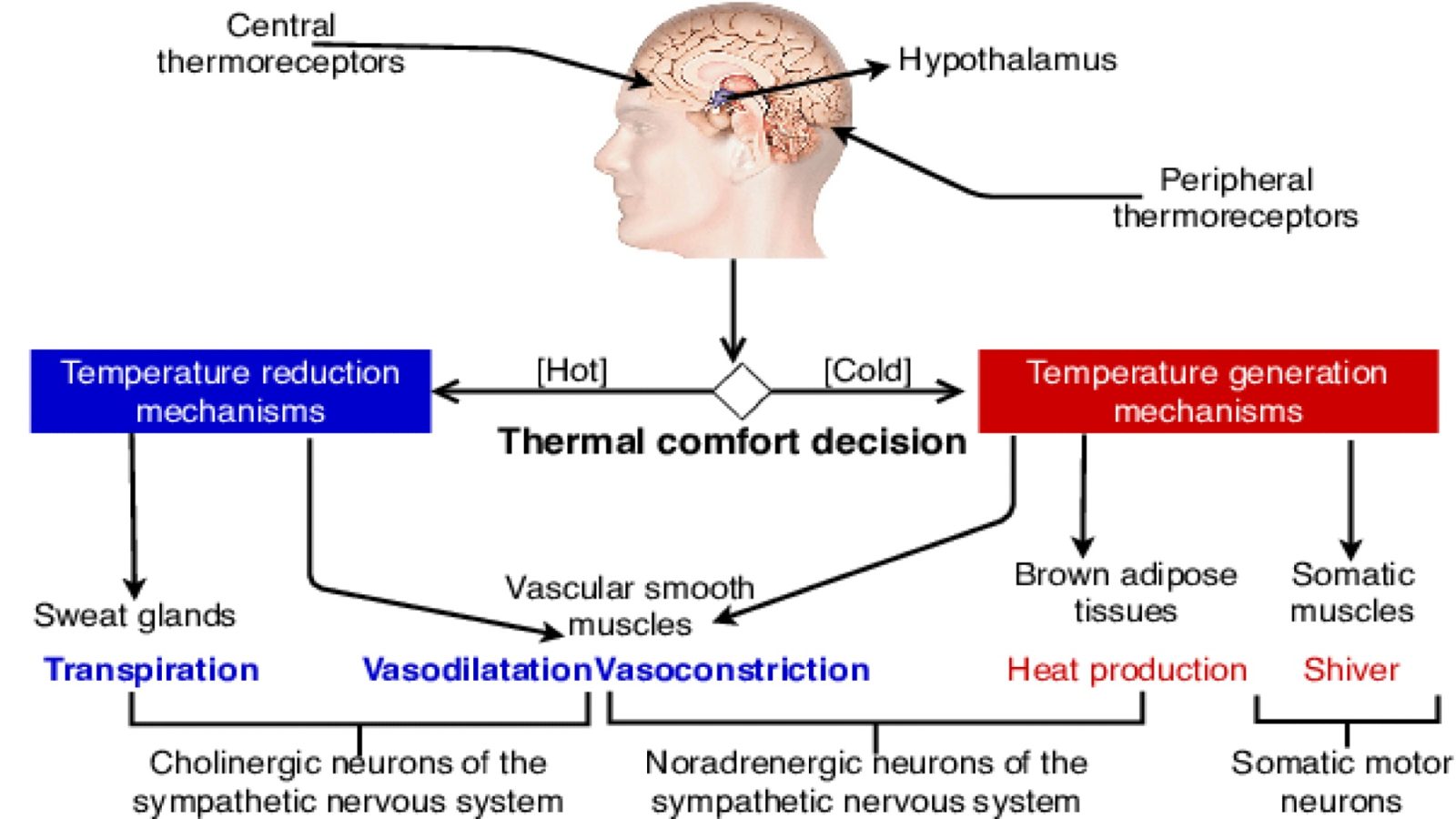

Our bodies are biological marvels, subtly shifting to mirror the shifts that happen inside and outside us without our even recognizing it. Perhaps the best demonstration of this unseen genius is your brain’s hypothalamus. Operating like a clever thermostat, this small area deep within your brain detects temperature shifts and initiates processes that control body temperature—often before you even know it’s happened. With more than two million sweat glands under its command, the hypothalamus is your body’s defense against heat.
The Hypothalamus: Your Body’s Automatic Climate Control Center
Deep inside your brain, the hypothalamus keeps your body in homeostasis—the internal balance. It controls hunger, thirst, sleep, and most importantly, body temperature with accuracy and speed. As your body starts to heat up, even a little bit, thermoreceptors on the surface and within the organs alert the hypothalamus. Before you notice you are hot, the hypothalamus has started cooling mechanisms to maintain your temperature close to the optimal 98.6°F (37°C).
This capacity to predict is one of the things that makes human beings so resilient. Under these circumstances, external regulation in the form of fluid therapy, cooling clothing, or air-conditioned space must be used to provide a safe temperature. You’re running in the scorching sun or stuck in a hot room, your hypothalamus senses the risk of overheating and begins to prepare your body for it—before any harm is inflicted.
How Sweating Works: Your Skin’s Built-in Cooling System
The hypothalamus commands more than two million sweat glands scattered all over your skin to begin secreting water. When the sweat evaporates off of your skin, it removes heat along with it, chilling your body in the process. This is a very effective system; one liter of sweat can give up over 500 kilocalories of heat. That’s a small meal for heat!
Not all sweat glands are identical. Eccrine glands, distributed all over your body, are mostly in charge of temperature regulation via watery sweat. Apocrine glands, which cluster together in places such as the armpits, are more stimulated by stress than heat. Your hypothalamus dictates which of the two glands are selectively stimulated according to your activity level and emotional state, creating your sweating pattern as distinctive as your fingerprint.
Heat Acclimatization: How Your Thermostat Learns Over Time
Ever observe how the initial hot days of summer are absolute torture, yet within a week or two, your body adjusts? That’s your hypothalamus once again. By exposure to repeated heat, your thermoregulatory system adapts more effectively. This is called heat acclimatization and is achieved by an earlier activation of sweating, greater sweat volume, and enhanced skin blood flow.
High-performance individuals and athletes performing outside their climate tend to train their body to acclimatize to heat in this manner. It is the reason that marathon runners can run outdoors in the tropics without falling over from heat exhaustion. By altering the sensitivity of your hypothalamus, your body can better withstand and operate when subjected to extreme thermal stress.
When Things Go Wrong: Disorders of Temperature Regulation
As good as it is, the hypothalamus is not infallible. Diseases such as heat stroke, injury to the hypothalamus, or endocrine diseases can interfere with its thermoregulation. During heat stroke, cooling mechanisms for the body fail, and core temperature becomes elevated to harmful levels. Without treatment, it can cause permanent damage or death.
Aging, neurologic disease, and other medications also compromise thermoregulation. For example, elderly individuals have decreased sweating and are more susceptible to environmental heat and cold. Under these circumstances, external regulation in the form of fluid therapy, cooling clothing, or air-conditioned space must be used to provide a safe temperature.