
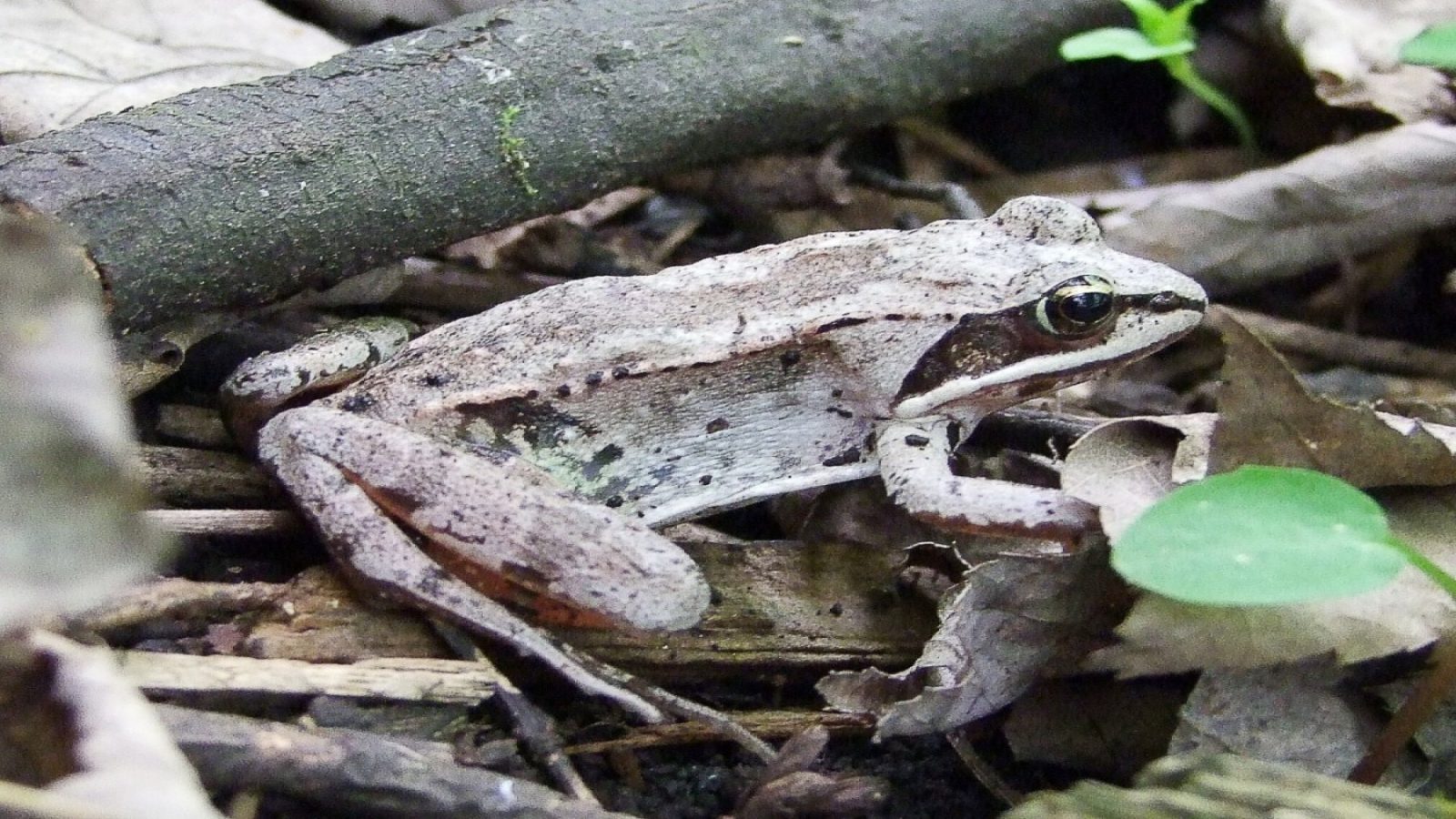

The wood frog, Lithobates sylvaticus, has developed a survival method that appears almost impossible: it freezes solid over the winter. On every continent on North America, and even into the Arctic tundra, this frog’s body performs a spectacular trick when it becomes cold. It takes a breath, its heart stops circulating blood, and up to 70% of its body water freezes. But come spring again, it melts out and hops away as though nothing was wrong.
How the Wood Frog Freezes Alive
While freezing-avoiding mammals hibernate, the wood frog welcomes it. As it freezes, its blood sugar level increases to spectacular levels, and urea is deposited in its tissues. Both of these substances are natural cryoprotectants that inhibit deadly ice formation within cells. Even though ice forms in between cells, the cells themselves do not freeze and remain intact.
Glucose and urea together save the cells from death because of intense dehydration, which may make them burst or collapse. The protective casing allows the internal organs of the frog to survive even when the frog is frozen for weeks continuously. Its metabolism reaches zero, killing all activity until the body melts again. When it melts, the heart starts beating again and the frog comes back to life.
This is a precarious process, and the margin of error is extremely narrow. Freezing too rapidly will permanently destroy the frog. But evolution has honed this biological clock over thousands of years to provide an impressively precise shut-down of the organ systems. It is one of a handful of vertebrates known to survive such a high level of internal ice accumulation.
Decades of Research Unlock the Secret
Since more than 30 years ago, biologists Kenneth B. Storey and Janet M. Storey at Carleton University have researched this freeze-tolerant wonder. The scientists found that the liver of the frog breaks down glycogen into glucose rapidly while freezing occurs. The glucose floods into tissues and prevents ice from damaging cells. At the same time, certain stress proteins and enzymes turn on to safeguard cell structure while freezing occurs.
Ice formation is tightly regulated and restricted to regions outside of the cells. Inside the cells, protective substances inhibit fatal crystallization. Dehydration of certain cells results in shrinking but does not break their membranes and organelles. These tightly regulated reactions enable the frog to experience repeated cycles of freezing and thawing during one winter.
Their work also demonstrated seasonally regulated genes in wood frogs. Freezing tolerance genes are induced several months prior to winter. That it can be revived from whole-body freezing is a proof-of-concept that nature already has some of these problems solved. This makes the frog ready well before the initial frost. The molecular ballet involved is as sophisticated as it is efficient.
From Frog Biochemistry to Human Medicine
This natural freeze tolerance has caught the eye of people far outside of the world of amphibians. Biologists studying cryopreservation look to the wood frog as a model for storing human tissues and organs more effectively. Should the same cryoprotective strategies be applied, medical teams can store organs for longer periods, giving patients more time for transplantation. The frog’s methods can, one day, make storage of blood, corneas, and even organs at subzero temperatures possible.
There is also increasing interest in the cryonics community, where long-term freezing of human beings is still purely theoretical. Scientists hope that frog survival methods will spread into next-generation low-temperature biology technology. That it can be revived from whole-body freezing is a proof-of-concept that nature already has some of these problems solved. With further research, the wood frog could contribute to pushing the boundaries of human medicine.